Showing posts with label pasta. Show all posts

Saturday, March 22, 2008

Macaroni and Cheese--the Original Comfort food!

Recently my daughter's choral ensemble was hosting a lunch for the singers, and someone had requested a macaroni bar--a sort of buffet featuring different types of macaroni dishes. My contribution was homemade macaroni and cheese, a favorite around here that is much creamier and tastier than that blue box stuff. Experiment with the combinations of cheeses for your own unique dish!

#*...*#.-.~`~`~`~.-.#*...*#*...*#.-.~`~`~`~.-.#*...*

Homemade Macaroni and Cheese
Serves a large family or a small family with guests

4 cups elbow macaroni
8 tablespoons butter
1/2 cup unbleached all-purpose flour
4 cups whole milk
2 cups grated Vermont sharp cheddar (white cheese)
8 ounces cubed flavorful melting cheese, cut into small cubes
(optional) 1 cup crumbled Ritz crackers and 2 tablespoons butter

Preheat the oven to 350 F.

Butter a 13x9x2 baking dish (I use my stone cookware and then I don't butter it)
Cook the macaroni according to the al dente package directions. Drain and spread into your baking dish.
Melt the butter slowly, then whisk in the flour, mixing completely. Add milk.
Stir until it's smooth and thick.
Add the grated cheddar; stir until melted.
Season with salt and pepper to taste.
Add the sauce to the macaroni in the baking dish, stirring until the sauce is evenly distributed over the macaroni.
Evenly distribute the chunks of cheese throughout the macaroni. It won't be melted just yet, but will melt as you bake the dish.
At this point, you can cover the top of the macaroni with the crushed crackers and dot with 2 tablespoons of butter, if you like. I don't care for it, so I leave it off, but you could do it half and half the first time to see which one you like best.
Bake for 20 minutes, or until it's lightly browned and very bubbly.
Serve with hunks of buttered bread and a fresh salad. Yum!

Adapted from The Tasha Tudor Cookbook.

Saturday, August 25, 2007

Alfredo Sauce

Here's a simple sauce that offers a whole lot of flavor. Be sure to use freshly-grated parmesan cheese, not the Kraft kind, because that has stabilizers and anti-caking agents that keep it from melting, and it ends up a globby mess. Grating your own cheese is so easy with a MicroPlane Grater and a hunk of Parmagiano Reggiano. By the way, I just read in Cook's Illustrated that this raw cow's milk cheese manufactured in the North of Italy really is superior to any U.S. parmesans for a variety of reasons, including animal care and feeding/grazing, hand-processing as opposed to mechanized processing, and aging time. Apparently the U.S. manufacturers of parmesan take quite a few shortcuts, and it shows when put to the taste test. So if you're ever tempted to replace your more expensive Reggiano with a Wisconsin parmesan, remember that. Creates quite a dilemma for locavores. Unless, of course, you live in Northern Italy.

::...8oOo8...::...8oOo8...::...8oOo8...::...8oOo8...::

Alfredo Sauce

1/4 cup butter
1 cup heavy cream or whipping cream (try to find some that isn't Ultra-Pasteurized because it thickens better)
1 clove of crushed garlic
1 1/2 cups freshly-grated Parmagiano Reggiano or other high-quality grating cheese
1/4 cup chopped fresh parsley

Melt butter over medium heat in a medium-sized saucepan. Add the cream and heat very slowly for about five minutes, then add garlic and cheese and whisk. Heat through and cook on low until thickened. Stir in parsley. Serve this over fresh fettucine noodles!

Sunday, April 8, 2007

An Easter Lunch: Gruyere Fondue Salad

I was a bit dubious about this salad as I was preparing it. It wasn't that I haven't experienced and enjoyed warm-dressing salads before; it was just that the combination of ingredients sounded a bit contrary. Cold endive and warm roasted yukon gold potatoes? Vinaigrette with a gruyere fondue-type sauce? Yet it sounded irresistably appealing.

So the family gathered in the kitchen to make a unique Easter Sunday salad lunch to tide us over until evening when the roast beef, mashed potatoes, asparagus, corn and fresh bread would be ready. One person sliced potatoes, one browned the bacon, one rinsed and spun the greens, one mixed the vinaigrette and the white wine sauce and, before long, we were eating a fabulous lunch that everyone thoroughly enjoyed.

The white wine sauce would be wonderful alone with a fresh pasta.

Roasting the potatoes takes time, as well as making the different sauces, but I think you'll really enjoy my variation of a recipe that I found published in a 2004 issue of Country Home magazine, created by Red Cat chef Jimmy Bradley.

Be sure the potatoes aren't too thick and that they lay in a single layer, or they won't cook evenly.

Enjoy!

**sLoW**SlOw**sLoW**SlOw**sLoW**

Gruyere Fondue Salad

8 oz gruyere cheese, finely grated and set aside at room temperature for 30 minutes
2/3 cup extra virgin olive oil
1/3 cup sherry vinegar
1 tsp sugar
1 lb yukon gold potatoes, sliced 1/2 inch thick
2 tablespoons olive oil, divided
6 oz fresh shitake mushrooms, rinsed and de-stemmed
1 cup dry white wine
2 shallots, chopped, or two cloves or garlic, minced
1 tablespoon butter, softened
1 tablespoon all-purpose flour
2 cups arugula
2 cups belgian endive, chopped, or romaine lettuce, chopped
2 cups arugula, torn

Mix vinaigrette: In a screw-top jar, combine vinegar, 2/3 cup olive oil and sugar. Shake to mix. Add salt and pepper to taste. Set aside.

Cook bacon until crisp. Drain on paper towels. Set aside.

Place potatoes in a bowl and drizzle one tablespoon of olive oil and sprinkle with salt and pepper. Place on a greased baking sheet in a single layer on one end of the baking pan. Roast, uncovered, in a 400 degree oven for ten minutes.

Toss mushrooms with remaining one tablespoon of olive oil and sprinkle with salt and pepper. Add mushrooms to other end of the baking pan after potatoes have roasted for ten minutes, then bake ten minutes longer or until potatoes are tender.

Meanwhile, in a medium saucepan, combine wine and shallots or garlic. Bring to a boil. Boil for about 4 minutes or until wine is reduced to 3/4 cup. Stir together the softened butter and the flour, then add it to the wine mixture, stirring well. Add whipping cream. Cook over medium heat until bubbly. Reduce heat to medium-low; gradually add the grated cheese, little by little, stirring after each addition until all the cheese has been added and melted.

Combine the potatoes, mushrooms, greens and vinaigrette.

Divide the warm cheese among six bowls and top each with the potatoes and greens mixture. Top with crumbled bacon. Serve while still warm.

Sunday, January 21, 2007

Fettucine with Carmelized Onions and White Wine Sauce and A New Kitchen Tool

There are times when chaos rules all around me and I just don't care. Today was one of those days.

We'd just returned from morning service at church and I'd decided to experiment with a new pasta and a couple of sauces. The kitchen was still in a state of limited functionality after my previous day's venture into cleaning the spice drawer and reorganizing the pantry and cupboards. Everything hadn't been put back into place yet, but I didn't care. A clean washcloth to make a clear surface on my butcher block, my food processor and a couple of pots and pans were all I needed. Everything else could tumble down around me.

And it practically did.

Kids were tracking snow through the house. Other kids were scattering toys. Other kids were playing board games on the floor of the piano room. There was delightful chaos everywhere, and I was embracing it.

After sixteen-year-old Bard finished the Simple Hot Cocoa, I enlisted her help to make the two sauces I'd be tossing the fresh egg noodles in. She did all of it but chop the onions. The food processor did that.

She even used the best cheese grater in the world to turn a block of Pecorino into a bowl of light, fluffy flakes. If you regularly grate hard cheeses, the Microplane Classic Zester/Grater is the only way to go. It runs about $13.00 at the MegaKitchenType store and is totally worth it. Microplane originally began as a woodworking tool until the wife of a hardware salesman picked up a rasp to zest an orange for a cake after her other zesters just didn't cut it. She was pleasantly surprised by the results and made the Microplane Grater a regular kitchen tool. After trying rotary cheese graters and not being impressed, I'm thrilled to have added the Microplane to my list of favorite kitchen tools. I hope to soon add the Medium Ribbon Grater for soft cheeses, butters, chocolates and apples. It may even give my Cuisinart a run for its money!

Both of the sauces were good, but the one that follows was delicious and proved the favorite of my seven testers. I'm not sure it was quite enough sauce for one pound of fresh egg noodles, and I did have to add some cream during the last stage, but it was still quite tasty. It even stopped the chaos long enough for the masses to be fed.

It takes a good bit of time to make fresh egg pasta, so be sure to set aside an hour for a pound and another twenty minutes or more for the sauce, depending on how quickly your onions brown.

For a bit of variation, try browning a 1/2 pound of bacon, removing the bacon and leaving 1/4 cup of grease, omitting the olive oil and browning the onions in the bacon grease instead. Continue with the recipe from there.

For best results, serve the pasta in warmed bowls. It loses heat fairly quickly.

Enjoy!

xXx--=..oOo*oOo..=--xXx--=..oOo*oOo..=--xXx--=..oOo*oOo..=--xXx

After making your egg pasta into one pound of fettucine, bring four quarts of water to a boil.

Grate 1/2 cup of Pecorino Romano very fine, maybe a bit more if you like to sprinkle the cheese on top of your pasta. Maybe even more, because you must sample it after you've grated it. It's just too light and fluffy to resist. Don't use pre-grated. It doesn't melt as nicely. It's better to just invest in a good grater and buy fresh wedges of cheese. Often, the pregrated cheeses are of lower quality and have anti-caking agents and other preservatives added to them. If you can't find the Pecorino Romano, you can substitute a good-quality parmesan, like Parmigiano Reggiano but you still need to fresh-grate it.

While the water is boiling and the egg pasta is resting, chop four onions very fine.

Heat 1/4 cup of extra-virgin olive oil in a saucepan that will be big enough to accomodate the noodles and the sauce. Saute the onions in the oil (or use the bacon variation suggested above) until well browned but not black.

When the onions are just about done, add two cloves of minced garlic and saute until onions are finished and garlic is lightly sauted.

Turn the heat up to medium and add 1/2 cup of white wine. Bring this to a simmer and make sure all of the onion bits are scraped off the bottom of the pan. Simmer it for about three minutes.

Add 1/4 cup of heavy cream to the pan and heat just until warm. Taste it and add salt to taste.

When your water comes to a boil, add one tablespoon of salt, then add your egg noodles. Cook them just until al dente, then quickly drain them and add them to the sauce, along with the 1/2 cup grated cheese.

Serve it warm with some more cheese on the side. A nice dish of steamed broccoli would go really well with this.
It will be worth the chaos, I assure you. Dishes, after all, can wait until tomorrow.
Monday, January 15, 2007

Fresh Egg Pasta with Alfredo Sauce

Just as with the egg pasta, the alfredo sauce is beautiful because of the few ingredients it requires. Heavy cream, unsalted butter, salt, Parmesan cheese, pepper and nutmeg. The result of combining these ingredients with fresh egg pasta is divine. Serve this as an appetizer, because it's so rich, and you'll have enough for 4-6 people. If you want to make a full meal of it, better double it.

The real keys to richness and thickness are to use cream that has not been ultra-pasteurized, to use really good, fresh-grated parmesan cheese (the pre-grated stuff has stuff added that makes it lumpy and isn't fresh enough to melt properly), and to cook the pasta to al dente before adding it to the sauce and then completing the sauce and the cooking of the noodles. These tips come from The Complete Book of Pasta and Noodles by Cook's Illustrated, a fabulous source for pasta and sauce recipes, hints, tips and step-by-step instructions.

::.[(.oOo.)]-*-::.[(.oOo.)]-*- ::.[(.oOo.)]-*- .::

Fresh Egg Pasta with Alfredo Sauce

1 2/3 cups heavy cream, preferably not ultra-pasteurized
5 tablespoons unsalted butter
Salt
1 Pound fresh Egg Pasta cut into tagliatelle
1 cup high-quality Parmesan cheese (I used Parmigiano Reggiano)
Ground white pepper
Pinch ground nutmeg

Bring four quarts of water to a boil.

Combine 1 1/3 cups cream and the butter in a pan big enough to hold both the sauce and the pasta. Heat over low until the butter is melted and the cream just begins to come to a simmer. Turn off the heat and set aside.

When the water comes to a boil, add one tablespoon of salt and add the pasta. Cook until almost al dente, drain it, and then add it to the sauce.

Add your last 1/3 cup of cream, the grated cheese, salt to taste, white pepper to taste (you can use black pepper, but the white pepper leaves the sauce white), and a pinch of freshly-grated nutmeg (which isn't necessary, but my tasters really love it).

Cook over very low heat, toss to combine ingredients, and watch carefully until the sauce is slightly thickened, a couple of minutes.

Divide among 6 warmed bowls and serve hot!

::.[(.oOo.)]-*-::.[(.oOo.)]-*- ::.[(.oOo.)]-*- .::

The Pasta Experience

As part of my current obsession of making my own pasta dishes, I recently acquired an Imperia pasta machine which arrived on Saturday. Sunday, I promised, would be the day to make our first home-made pasta.

The beauty of pasta is that it requires only two ingredient: flour and eggs. How much more basic can you get than that? The time element to making your own pasta is in the actual rolling and cutting of the dough into noodles. Having a pasta machine is very helpful for this process. While you can make noodles without a machine, using a rolling pin and knives or rolling cutters, the pasta machine makes it much easier. The dough is rolled very, very thin, to the point where you can see the silhouette of your hand through the rolled dough.

You can get more fancy with the ingredients than just the flour and eggs, but it's not necessary. Still, I hope to experiment with some other recipes and techniques, and I'll pass those outcomes on to you as I find them.

The first experiment in The Pasta Experience was to make tagliatelle with alfredo sauce. It took us a long time to make the whole dish, from start to finish. I think the total time was about two hours, and some of that time was spent figuring out how to work the machine and exactly what the dough should feel like. Actually rolling the dough through the machine was not hard at all. My best cooks, which are my two sons, jumped right in to help, and my older son, who is 15, ended up finishing the noodles while I started the sauce. Having an extra hand helps. Even the three year old got into the act, turning the handle to produce long tendrils of fresh noodles. This is a very fun family activity. Make a few appetizers to stave off hunger, whip up your dough, and start rolling! Better than television any day.

So turn off that one-eyed monster. It's time to cook!

Are you ready? Here we go!

))*^*...*^*...*^*(())*^*...*^*...*^*(())*^*...*^*...*^*((

We'll begin with an easy-way-out method, and that's using a food processor to make the dough. If you don't have a food processor, keep your eyes peeled because we'll experiment with hand-mixing the dough.

2 cups of all-purpose flour
3 large eggs, beaten

Ingredients should be at room-temperature before you start, so if you keep your flour in the freezer, like I do, be sure to let it warm up before starting. Start with very fresh eggs, too.

Put your flour in the work-bowl of the food processor, fitted with the steel blade. Pulse it a few times to get the flour all nice and fluffy.

Add the eggs and process the eggs and flour together for about thirty seconds. After thirty seconds, you should see the dough form a rough ball. If it really sticks to the sides of the work bowl, add a bit more flour, little by little, until you get a moist, cohesive dough. On the other hand, if it's too dry and looks like crumbles, add water 1/2 teaspoon at a time until you get the right consistency.

Put the whole mass, including any crumbs or chunks or un-mixed egg, onto a clean work surface and start kneading. It'll be a little tough, not like bread dough, so you're basically just going to keep folding and turning and folding and turning until you get a nice, smooth dough.

Put the dough into a zip-type bag and let it rest anywhere from 15 minutes to 2 hours at room temperature.

Divide the dough into about six or eight pieces, take one out, and put the others back in the baggie. Flatten your piece a bit and lightly coat it with flour on both sides.

If you haven't used your pasta machine before, you'll want to throw this piece out after you run it through. I had to throw out two pieces before the pasta machine ran the dough clean. This is a good chance to experiment with the dough and the pasta machine, so have fun with it.

When it's time to run your first real piece of dough through the machine, start it on the lowest number, which is the widest setting. Fold the dough ends so that the meet in the middle, and then put the piece through the machine again on the widest setting, feeding the open end of the dough through first (not the folded end, but the other end). Run it through the widest setting again, getting a nice, smooth dough. Remember to use flour when the dough gets sticky, but not too much so that you make a tough dough.

Now, each time you run the dough through, narrow the setting until you've run the pasta through the narrowest setting and your dough is very, very thin.

At this point, if the dough is stable enough, you can run the pasta through the cutter attachment. If you want to make all of your dough sheets first and then cut them, stack your sheets of dough between layers of moist, clean kitchen towels. If the dough seems too sticky to cut, let it rest a few minutes before you cut it.

After the dough has been cut, hang it on a rack to dry for about fifteen minutes to cure before boiling it. You can leave the noodles out for up to two hours before cooking, if you need to.

Then, you're ready to make your pasta and sauce!

For excellent instructions with photos and illustrations, see The Complete Book of Pasta and Noodles by Cook's Illustrated and The Pasta Bible by Jeni Wright. Check your local library for other books on pasta, pasta-making and sauce.

Up next, Fresh Egg Noodles with Alfredo Sauce.

Sunday, January 14, 2007

Pasta Success!

Today, we christened the pasta machine and turned out two pounds of eggs-ellent egg pasta, tagliatelle-style. We cooked it up with a nice, creamy alfredo and all of my testers devoured it gladly. It was thumbs up from them! One tester rated it above the local authentic Italian restaurant.

Sound delicious? You can do it, too!

Stay tuned here tomorrow for details and recipes for today's dish, and join me for the next couple of weeks as I experiment with different pasta recipes, techniques and sauces!

Saturday, January 13, 2007

It's here!

Finally, my pasta maker has arrived! Believe it or not, after all of this waiting, I'm now feeling intimidated by this hunk of metal sitting on my kitchen table.

But I shall not be deterred. Fresh pasta tomorrow, I tell you.

Friday, January 12, 2007

In Today's Bookbag: Pasta Books

Now, let's veer back to my current obsession--pasta--just long enough to drool over these two books I brought home in today's library bookbag. I can't go into depth with them, because my pasta maker has still not arrived (this is now Day Five of my wait. Sigh), so I only tortured myself with the stacks and stacks of Italian cookbooks long enough to determine that I must own these two books:

This one truly is a bible of pasta knowledge. It covers all of the different types of pastas-- fresh, dried, designer pastas, shaped pastas--as well as instructions on how to make, cook and serve pasta, what wines to serve with your pasta, creating striped and silhouette pasta, sections on herbs and seasonings to have on hand, oils and vinegars, tomatoes and cheeses. And, of course, there are tons of recipes--over 150--for soups, salads, sauces and baked dishes. Be sure to look for The Pasta Bible by Jeni Wright if you've found pasta to be your current obsession, too.


The Williams-Sonoma book, Mastering Pasta, Noodles & Dumplings includes, as expected, lots of gorgeous pictures, recipes for basic and flavored pastas, and step-by-step instructions on pasta making, accompanied by plenty of photographs. While I haven't made any of the recipes in the book yet, it sure is delicious eye-candy!
Enough torture. As soon as that pasta maker arrives, we'll be revisiting these books for recipes and inspiration.

Sunday, January 7, 2007

I'm the proud owner of an Imperia 150!

It was a close one, but I won the bid in the last six seconds.
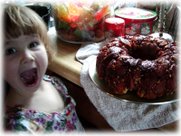
My husband and I danced around the room when I won.

I'll be watching the ol' lane for the delivery man to bring my new pasta maker straight to my door, and for $20 less than the one at the specialty shop.

And then? Pasta time!

Pasta Maker Quest

After reading several books on pasta and doing some searching on the web, I determined that there are generally two hand-crank pasta makers that are the best, the Atlas and the Imperia. So this week, as an anniversary gift from my husband, we went on a quest for a pasta maker.

Now, that might sound grammatically incorrect, like the quest was the anniversary gift. But there is no error in grammar here. Truly, the quest was all we ended up with. So far.

Together with my long-suffering husband, I searched EIGHT kitchen supply stores or stores that featured very large kitchen departments, including one home/kitchen/bath supply mega store, one department store, one kitchen appliance store, one specialty imports store, two high-end discount stores, and two small kitchen specialty shops.

Ironically, it was at the second small kitchen specialty shop, just fifteen minutes from my very rural country home, that I found not one, but three brands of pasta makers in several different package choices. Unfortunately, they were all about twenty dollars higher than I had found them to be suggested during my online searches.

I really struggled with this, standing in the aisle debating about whether to buy one immediately for the higher price and have pasta steaming on the table by dinnertime, or go home and do some online shopping where shipping might negate the savings and I'd have to wait a week.

While staring googly-eyed at the choices and trying to make a decision, another more seasoned couple entered the pasta-maker zone. They hadn't done much research, they said, but the did have an electric pasta maker, and it wasn't worth a darn, they said, so they wanted a hand-crank (this confirmed what I'd read about the bread-machine-like pasta machines). They did know, however, that the Imperia brand, the one I was leaning very heavily towards, was the one they'd heard was the best.

My husband and I determined to buy the model I thought I wanted--the Imperia with just one cutter for $59.99--try it, and return it if it didn't work the way I had hoped. Unfortunately, the store had a no-return policy on items that had been used, which is perfectly understandable but didn't help my decision too much.

Then again, I suppose it did.

I decided that, since these pasta makers were just minutes from my home, I would go home and do some more research and return if I found that I couldn't purchase these more reasonably online. Part of me feels badly about doing this; I should support local businesses--especially ones that carry otherwise hard-to-find items. Part of me feels badly about the idea of spending an extra $20 on something when that money could be better spent.

Eventually, my husband found a variety of both makes of pasta makers on eBay and we're currently watching several of them. The prices for them this way were decidedly cheaper--along the lines of thirty dollars cheaper, including shipping.

So I guess I have to wait.

After all, this cooking blog is about slowing down, isn't it?

Saturday, January 6, 2007

My Current Obsession: Pasta

My current obsession is fresh pasta.

About six months ago, my sons made fresh egg pasta as a science project, and I was completely blown away by the difference. I've had what was called "fresh" pasta at finer restaurants, but there was simply no comparison between those and the ribbons of thick, delicious, flavorful pasta my sons turned out that day. We topped it with a simple alfredo, and it was fabulous.

So, I have been reading extensively about fresh pastas and homemade sauces, different types of cheeses and cheese graters, and searching both local stores and online sources for a hand-crank pasta cutter.

The two top recommended types of pasta cutters are the Atlas and the Imperia. Reviewers say that the Atlas is the best, most stable and easiest pasta cutter they've ever used. Cook's Illustrated says that either can be difficult to find in kitchen or retail stores, so to buy whichever one you find; they both cost around $40 each and don't seem to have any distiguishable differences that would set them apart from each other. If you have a different opinion, be sure to let me know.

The one thing I really like about the idea of a pasta cutter is that you never need to clean it. Okay, maybe that's a bit of a hyperbole. You do need to clean it, but only with a soft cloth and a little dry brushing. It's not to touch soap and water.

To journey along with me on my quest for s-l-o-o-w-w pasta, check out The Complete Book of Pasta and Noodles from the Cook's Illustrated folks. I have recently fallen in love with Cook's Illustrated, and if you are just getting into real cooking and want to learn more, you should, too.

In the days and weeks to come, I'll be experimenting with fresh pasta, different recipes, different ways of cutting it and different shapes, different ways of preparing it and different sauces to combine with it.

If you have experience with fresh pasta, pasta cutters or makers, sauces or other pasta-related information, share 'em in the comments.